What is bitumen?
Bitumen is a dense, highly viscous petroleum residue obtained from the vacuum distillation of selected crude oils, sometimes further processed by air-blowing or polymer modification. In North America the binder itself is commonly called 'asphalt' or 'asphalt cement'; in most other markets 'asphalt' refers to the finished mix of bitumen with aggregates.
The commodity is graded by how it behaves at service temperatures: how hard it is (penetration), how it flows (viscosity), and — in the Superpave system — how it performs across a high and low pavement temperature range (performance grade, e.g. PG 64-22). Choosing the wrong grade for a climate is one of the most common causes of premature rutting or cracking.
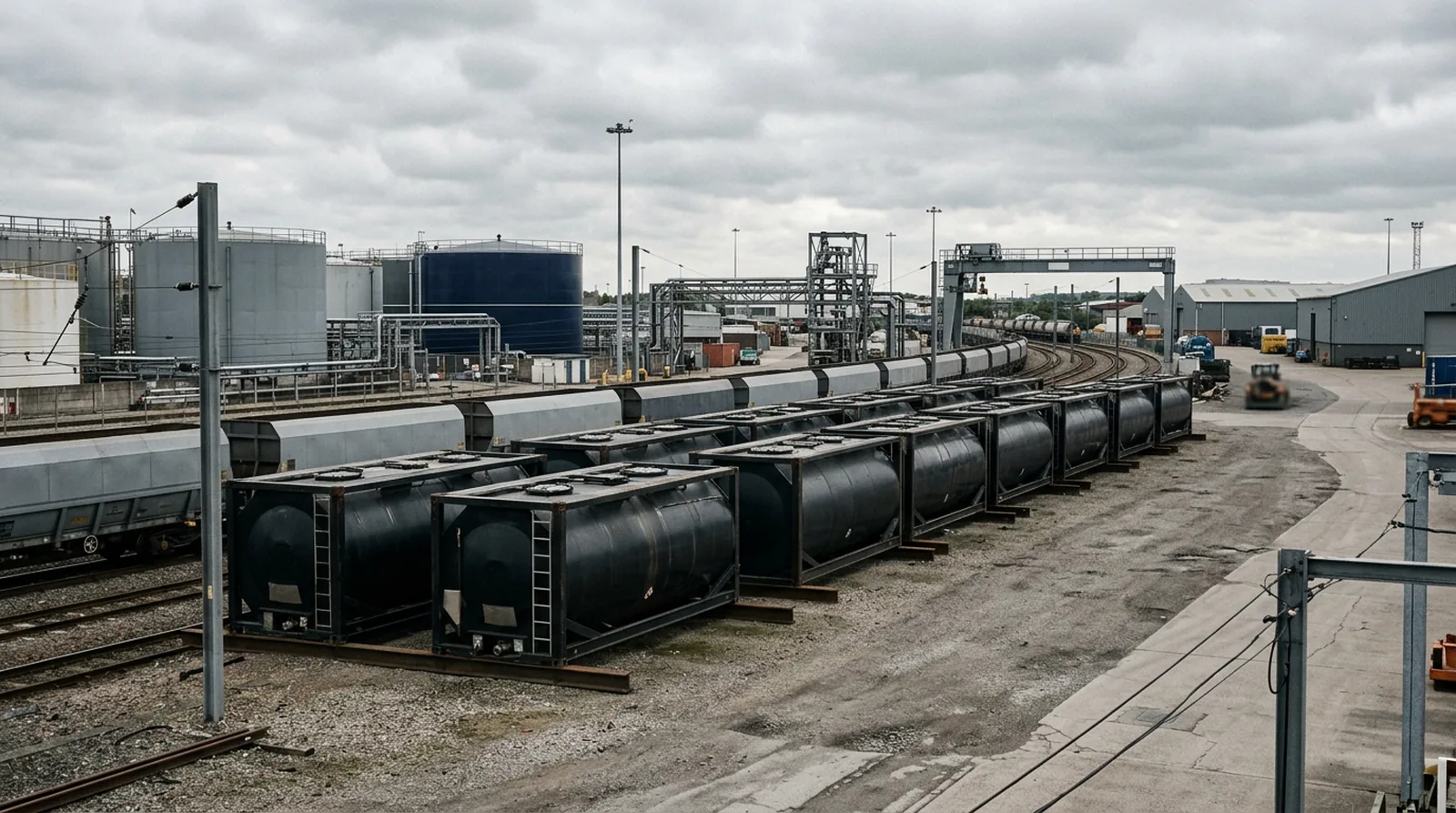
Because bitumen must be kept hot to stay pumpable, logistics drive cost. Bulk bitumen moves on specialised heated tankers into heated terminal storage; markets without such infrastructure rely on steel drums or polypropylene bitubags that can be shipped in containers and re-melted on site.
Grades & forms
Penetration grades (60/70, 80/100, 40/50)
Classified by needle penetration at 25 °C (ASTM D5 / EN 1426). 60/70 is the workhorse paving grade for hot climates.
Viscosity grades (AC-20, AC-30, VG-30)
Classified by absolute viscosity at 60 °C; common in US legacy specifications and Indian IS 73.
Performance grades (PG 64-22, PG 70-22, PG 76-22)
AASHTO M 320 Superpave binders specified by most US DOTs; higher grades are usually polymer-modified.
Polymer-modified bitumen (PMB / SBS)
Improves elasticity and rut resistance for heavy traffic, airports and port pavements.
Emulsions & cutbacks
Bitumen dispersed in water (CRS-2, CSS-1h) or solvent for spray seals, tack coats and cold-mix work.
Oxidised / blown bitumen (85/25, 115/15)
Harder grades for roofing, waterproofing and industrial coatings.
Specifications
Penetration grade 60/70 — typical specification
| Parameter | Limit / value | Test method |
|---|---|---|
| Penetration @ 25 °C | 60 – 70 dmm | ASTM D5 |
| Softening point (R&B) | 49 – 56 °C | ASTM D36 |
| Ductility @ 25 °C | ≥ 100 cm | ASTM D113 |
| Flash point (COC) | ≥ 250 °C | ASTM D92 |
| Solubility in TCE | ≥ 99.0 % wt | ASTM D2042 |
| Loss on heating | ≤ 0.2 % wt | ASTM D6 |
| Specific gravity @ 25 °C | 1.01 – 1.06 | ASTM D70 |
PG 64-22 — AASHTO M 320 headline criteria
| Parameter | Limit / value | Test method |
|---|---|---|
| Original binder G*/sinδ @ 64 °C | ≥ 1.00 kPa | AASHTO T 315 |
| RTFO residue G*/sinδ @ 64 °C | ≥ 2.20 kPa | AASHTO T 240 / T 315 |
| PAV residue creep stiffness @ −12 °C | ≤ 300 MPa | AASHTO T 313 |
| Flash point | ≥ 230 °C | AASHTO T 48 |
Values summarise commonly referenced public standards for orientation only. The specification attached to the executed contract always governs.
Trade terms
- Incoterms
- FOB refinery or export terminal for bulk; CFR/CIF to a named port for bulk or containerised drums/bitubags; DAP for project deliveries.
- Packaging
- Bulk (heated bitumen tankers, typically 2,000–10,000 MT); new steel drums of roughly 150–180 kg net; bitubags of approximately 1 MT net, loaded around 20 MT per 20' container depending on weight limits.
- Pricing basis
- Fixed price per metric tonne for packed product; bulk often indexed to a fuel-oil or regional bitumen assessment plus a differential.
- Payment instruments
- Irrevocable documentary letter of credit (UCP 600) at sight or deferred, standby letter of credit (ISP98) supporting open-account terms, or cash against documents for established counterparties. Proof of funds and proof of product are exchanged only after KYC is complete.
- Inspection
- Independent quantity and quality inspection at the load port by an internationally recognised surveyor (e.g. SGS, Intertek, Bureau Veritas), with the certificate of quality and quantity forming part of the presentation documents.
- Temperature & handling
- Bulk loading and discharge temperatures agreed in the charter and SPA; heated storage at destination is a condition precedent for bulk business.
Use cases
Road construction & resurfacing
National road programmes and municipal resurfacing that need consistent grade and delivery cadence.
Airports & ports
Polymer-modified binders for runways, aprons and container yards subject to heavy point loads.
Roofing & waterproofing
Oxidised grades for membranes, felts and foundation waterproofing.
Asphalt plants & importers
Term supply into heated storage for hot-mix plants and regional distributors.
Logistics
- Bulk bitumen carriers maintain cargo at elevated temperature throughout the voyage; discharge requires compatible heated shore tanks.
- Drums and bitubags ship in standard dry containers and suit islands or sites without heated storage.
- Lead times are driven by refinery allocation and the limited global fleet of bitumen tankers.
Related services
- Feedstock & Offtake Sourcing Agreements — Term supply for processors and committed offtake for producers, with verification and documentation built to bankable standards.
- Private Credit & Insurance Wrappers — Private credit combined with credit insurance, guarantees and collateral control to bridge the gap between shipment and payment.
Frequently asked questions
- Bitumen or asphalt — which do I need?
- In US usage 'asphalt binder' and 'bitumen' are the same material. If you need finished paving mix, that is produced locally at an asphalt plant from binder plus aggregate.
- Can you ship to a port without heated storage?
- Yes — drums or bitubags in containers are the usual solution. They cost more per tonne than bulk but remove the infrastructure barrier.
- Which grade suits the Caribbean climate?
- 60/70 penetration or PG 64-22/PG 70-22 are common for hot climates; heavy-traffic or port pavements often justify polymer modification. The project engineer's specification governs.
Supplier directory
Lane guides for each bitumen product by city, US state and FOB port: