What is rubber?
Natural rubber is a polymer (cis-1,4-polyisoprene) harvested as latex from Hevea brasiliensis trees, predominantly in Southeast Asia and West Africa, and processed into technically specified block rubber (TSR), ribbed smoked sheets (RSS) or concentrated latex. Synthetic rubbers such as styrene-butadiene (SBR), polybutadiene (BR) and nitrile (NBR) are made from petrochemical feedstocks.
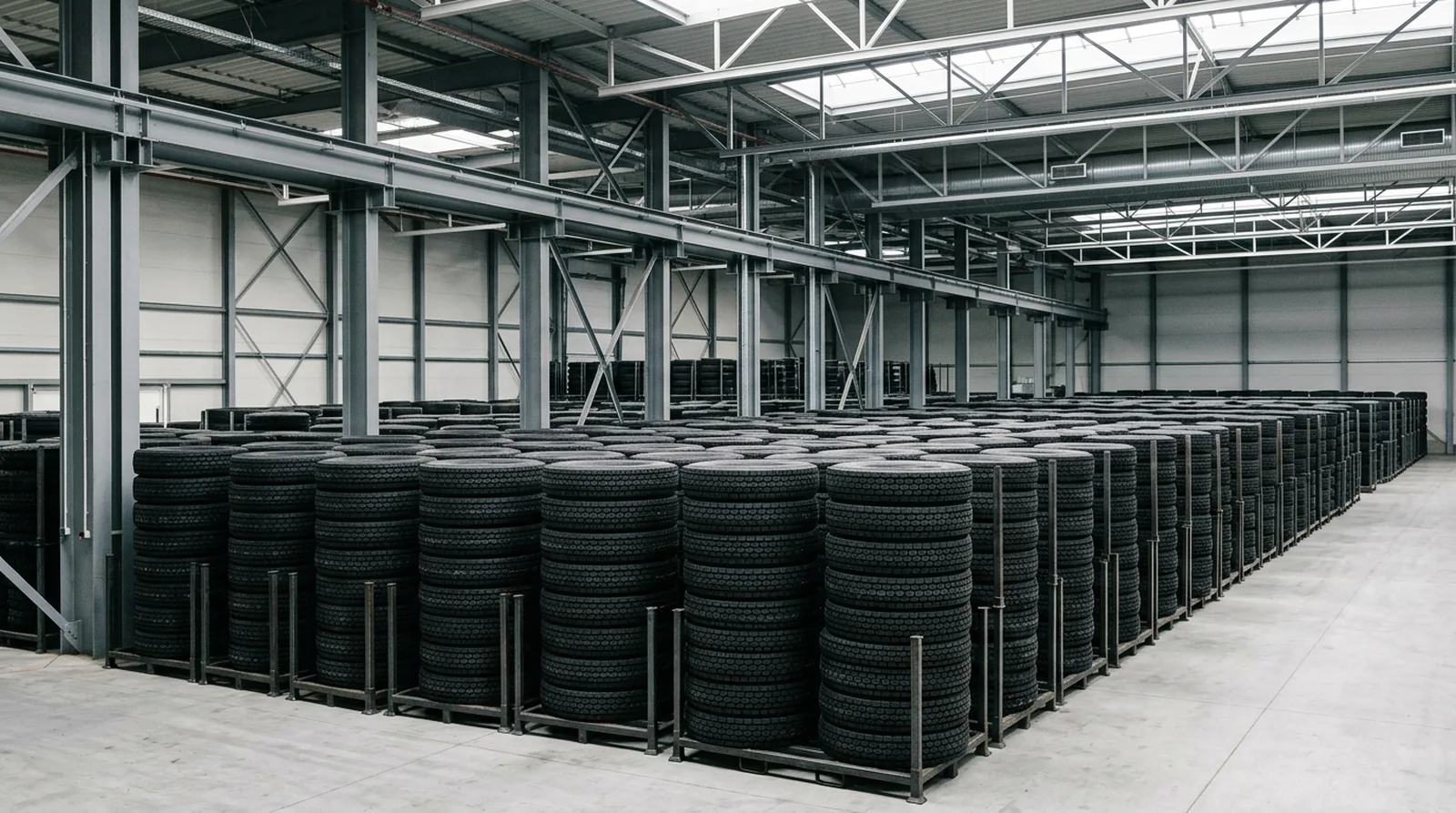
Tyres are the largest single end use for both. A modern passenger tyre blends natural and synthetic rubber with carbon black, silica, steel and textile cord. New tyres are traded by size, load index, speed rating and brand tier; end-of-life tyres (ELTs) are traded as casings for retreading, baled or shredded material, crumb rubber or tyre-derived fuel (TDF).
Natural rubber prices reference exchange contracts in Singapore (SGX SICOM TSR20), Osaka and Shanghai. ELT products are priced locally and are heavily influenced by environmental regulation and gate fees.
Grades & forms
TSR 20 / SMR 20 / STR 20
Technically specified natural rubber, the most traded grade for tyre manufacturing.
RSS 3
Ribbed smoked sheet, visually graded, used in tyres and general rubber goods.
Latex concentrate (60% DRC)
For gloves, foam and dipped products.
SBR 1502 / 1712
Emulsion styrene-butadiene synthetic rubber for tyres and mechanical goods.
New tyres (PCR, TBR, OTR)
Passenger/light truck, truck & bus radial and off-the-road tyres by size and load index.
End-of-life tyre products
Retreadable casings, 50–300 mm shred, crumb rubber by mesh size, and TDF chips.
Specifications
TSR 20 — typical limits (ISO 2000 based)
| Parameter | Limit / value | Test method |
|---|---|---|
| Dirt content (max) | 0.16 % wt | ISO 249 |
| Ash content (max) | 0.80 % wt | ISO 247 |
| Volatile matter (max) | 0.80 % wt | ISO 248 |
| Nitrogen (max) | 0.60 % wt | ISO 1656 |
| Initial plasticity P0 (min) | 30 | ISO 2007 |
| Plasticity retention index (min) | 40 | ISO 2930 |
Tyre-derived products — common specifications
| Parameter | Limit / value |
|---|---|
| Tyre shred | 50–300 mm nominal, wire exposed per buyer spec |
| TDF chips | ≈ 25–50 mm, ≥ 95% wire-free on request |
| Crumb rubber | 10–80 mesh, steel & fibre ≤ agreed % |
| Casings | Graded A/B by tread depth, age (DOT code) and damage |
Values summarise commonly referenced public standards for orientation only. The specification attached to the executed contract always governs.
Trade terms
- Incoterms
- FOB origin port or CIF/CFR destination in 20'/40' containers; new tyres usually CIF/DAP to distributor warehouse.
- Packaging
- Natural rubber in 33.33 kg or 35 kg bales, shrink-wrapped on pallets; tyres floor-loaded or racked; shred and crumb in bulk bags.
- Pricing basis
- Natural rubber against SGX SICOM TSR20 plus premium; new tyres on price lists by size; ELT products per MT or per unit with gate-fee adjustments.
- Payment instruments
- Irrevocable documentary letter of credit (UCP 600) at sight or deferred, standby letter of credit (ISP98) supporting open-account terms, or cash against documents for established counterparties. Proof of funds and proof of product are exchanged only after KYC is complete.
- Compliance
- Used tyres and tyre waste may fall under Basel Convention controls and national import bans; we verify the destination regime before contracting.
- Inspection
- Independent quantity and quality inspection at the load port by an internationally recognised surveyor (e.g. SGS, Intertek, Bureau Veritas), with the certificate of quality and quantity forming part of the presentation documents.
Use cases
Tyre & rubber goods manufacturers
Natural and synthetic rubber feedstock under term contracts.
Tyre distributors
Container programmes of PCR/TBR tyres by brand tier into Caribbean and Latin American markets.
Cement kilns & energy
TDF as a supplementary fuel where permitted.
Civil engineering & surfacing
Crumb rubber for rubberised asphalt, sports surfaces and moulded products.
Logistics
- Natural rubber ships in dry containers with moisture control; bales must not contact wet flooring.
- Tyre containers are floor-loaded to maximise count; manifests list size and DOT codes.
- ELT exports require documented downstream end use and, where applicable, prior informed consent.
Related services
- Feedstock & Offtake Sourcing Agreements — Term supply for processors and committed offtake for producers, with verification and documentation built to bankable standards.
- Tolling Agreements — Processing capacity without owning the asset: we structure, finance and administer tolling programmes between feed owners and independent processors.
Frequently asked questions
- Can you export end-of-life tyres from the Caribbean?
- Often yes, as shred, crumb or TDF to permitted end users — but whole used tyres face import bans in many countries. We confirm the legal route before quoting.
- Do you supply branded new tyres?
- We source from authorised distribution channels by brand tier; we do not trade grey-market or counterfeit product.
- What is TSR 20?
- A technically specified natural rubber graded on dirt, ash, volatile matter, nitrogen and plasticity — the most traded grade for tyre production.
Supplier directory
Lane guides for each rubber product by city, US state and FOB port: