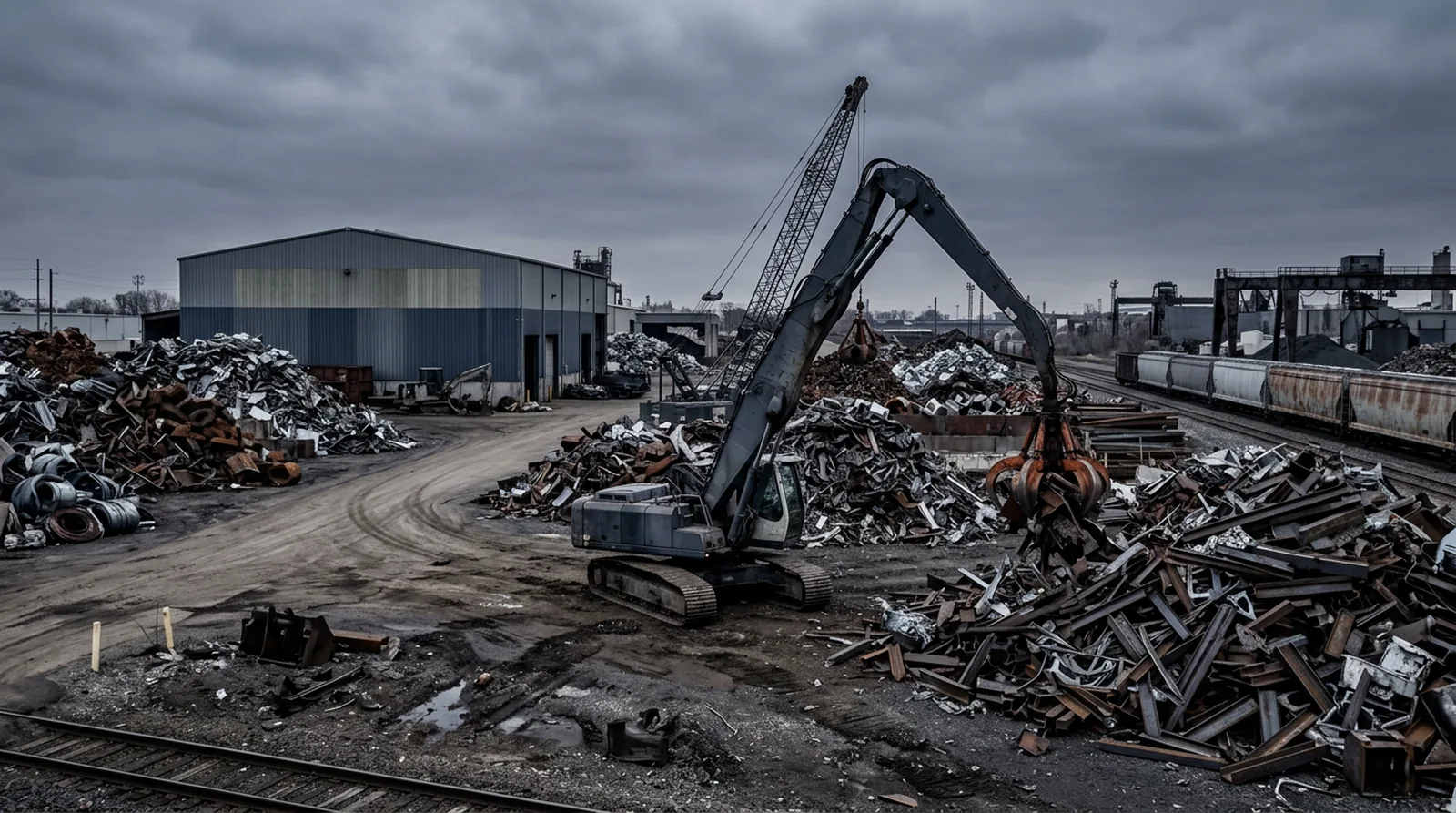
What is scrap metal?
Scrap metal is recovered metal from end-of-life products (obsolete scrap) and manufacturing off-cuts (prompt or new scrap) that is sorted, processed and sold as a raw material for steelmaking and non-ferrous smelting. Electric arc furnace steel mills depend on ferrous scrap as their primary feedstock.
Grades are defined by the Scrap Specifications Circular published by ISRI — now the Recycled Materials Association (ReMA) — which sets out composition, dimensions and permitted contaminants. Ferrous grades such as Heavy Melting Steel (HMS 1&2), Shredded and Plate & Structural (P&S) dominate seaborne trade; non-ferrous grades carry evocative names such as Berry and Candy (copper wire), Taint/Tabor (aluminium scrap sheet) and Zorba (shredded mixed non-ferrous).
Seaborne ferrous scrap is priced off benchmark import assessments (notably HMS 1&2 80:20 CFR Turkey) while non-ferrous scrap is typically priced as a percentage of the LME or COMEX metal price. Contamination, radioactivity and moisture are the main commercial risks.
Grades & forms
HMS 1&2 (80:20)
Heavy melting steel; a blend of 80% No. 1 and 20% No. 2 HMS by weight, minimum thicknesses per the specification.
Shredded scrap (ISRI 210–211)
Homogeneous fragmented ferrous scrap from auto-shredders; dense and clean, priced at a premium to HMS.
Plate & Structural (P&S)
Cut structural steel and plate of specified minimum thickness and maximum dimensions.
Busheling / prompt scrap
Clean new production off-cuts; low residuals, preferred for flat-steel production.
Copper grades (Berry, Candy, Birch/Cliff)
Bare bright and No. 1/No. 2 copper wire and tubing, priced against COMEX/LME copper.
Aluminium grades (Taint/Tabor, Zorba, UBC)
Clean sheet, mixed shredded non-ferrous and used beverage cans for secondary smelters.
Specifications
Ferrous export grades — key requirements
Summarised from the ISRI/ReMA Scrap Specifications Circular; the edition quoted in the contract governs.
| Parameter | Limit / value |
|---|---|
| HMS 1 | Wrought iron/steel ≥ 1/4 in thick; max 60 × 24 in charging-box size |
| HMS 2 | Wrought iron/steel including black & galvanised ≥ 1/8 in thick |
| Shredded | Homogeneous iron and steel, magnetically separated, max ~ 6 in pieces |
| Contaminants | Free of non-metallics, excessive rust, coated material and hazardous items |
| Radiation | No radioactive material; portal monitor check at yard and load port |
Non-ferrous — acceptance checks
| Parameter | Limit / value |
|---|---|
| Metal recovery / yield | Agreed % by grade |
| Moisture | Deducted above agreed threshold |
| Prohibited materials | Sealed units, pressurised vessels, free oil, batteries |
| Sampling | Container-by-container photographic and physical inspection |
Values summarise commonly referenced public standards for orientation only. The specification attached to the executed contract always governs.
Trade terms
- Incoterms
- FOB/FAS yard port for bulk vessel cargoes; CFR or CIF in 20'/40' containers for smaller and non-ferrous lots.
- Quantity
- Bulk ferrous cargoes of 10,000–40,000 MT on Handysize/Supramax vessels; containerised lots of roughly 18–26 MT per box depending on grade and weight limits.
- Pricing basis
- Ferrous: US$/MT with reference to HMS 80:20 CFR Turkey or regional assessments. Non-ferrous: % of LME/COMEX settlement on an agreed quotation period.
- Payment instruments
- Irrevocable documentary letter of credit (UCP 600) at sight or deferred, standby letter of credit (ISP98) supporting open-account terms, or cash against documents for established counterparties. Proof of funds and proof of product are exchanged only after KYC is complete.
- Inspection & compliance
- Pre-shipment inspection with photographs during loading, radiation certificate, and confirmation the material is non-hazardous under the Basel Convention and destination import rules.
- Claims
- Contamination and weight claims are resolved by joint survey at discharge with agreed deductions.
Use cases
EAF steel mills
Ferrous scrap as primary melt feedstock for rebar, billet and flat steel.
Foundries
Selected scrap and clean prompt grades for castings.
Secondary smelters
Copper and aluminium scrap for ingot, rod and alloy production.
Yards & consolidators
Export outlets for island scrap volumes where local melt capacity is limited.
Logistics
- Bulk scrap loads by grab or magnet crane; port must allow scrap handling and stockpiling.
- Containers are loaded at yard and sealed; photographs and seal numbers form part of the document set.
- Some destinations require pre-shipment registration or licensing of scrap exporters.
Related services
- Feedstock & Offtake Sourcing Agreements — Term supply for processors and committed offtake for producers, with verification and documentation built to bankable standards.
- Investment in & Purchase of Commissionable Services — We purchase, advance against and co-invest in verified commission entitlements, and fund credible origination work.
Frequently asked questions
- What is HMS 1&2 80:20?
- A blend of 80% No. 1 heavy melting steel and 20% No. 2 by weight, the most widely traded ferrous export grade.
- Can you take mixed scrap?
- We can market mixed material, but price reflects processing cost. Sorting to a recognised grade almost always improves the realised price.
- Do you need a radiation certificate?
- Yes. Every lot must be screened and certified free of radioactive material before loading.
Supplier directory
Lane guides for each scrap metal product by city, US state and FOB port: